In this article, we’ll address “How To Sleep In A Hammock Properly”. Sleeping in a hammock gets a bad wrap because many have had a bad experience and woken up with a sore back.
Rest assured, sleeping in a hammock can be done comfortably, pain free, and even for an extended period of time!
If you like traveling light and want to enjoy the beauty of a wide-open sky, hammock camping is the route to take. They are simple to set, can be used in all seasons (with the proper accessories of course), and leave absolutely no trace behind.
Hammocks also allow for better breathing and proper blood circulation, which helps to relieve stress and achieve sound sleep. It is important though to sleep in a hammock correctly for all these great benefits to take place…
While some people assume that sleeping in a hammock can harm your back, it all depends on how you do it. If done right, it can be absolutely delightful… and the benefits are endless.
1. Select The Right Hammock
There are many types of hammocks available on the market today, but not all of them are designed to offer you maximum comfort for sleep. That’s why it’s so important you choose the right hammock for your needs. Packability, weather resistance, and weight are all important factors to consider when choosing your perfect hammock.
- Rope Hammock – Great for lounging. You will find that the majority of these are made from either polyester or cotton, and perfect for a back-yard hang. Most rope hammocks come with a spreader bar, which allows for ease of use, but makes them rather unpackable. We like this Carribbean Rope Hammock.
- Hammock Chair – Again, great for lounging! Takes up minimal space, typically made from either cotton or polyester, with a spreader bar above to allow for stability and comfort in a seated position. Again, not super packable, but a wonderful way to relax. We like this heavy duty Y-Stop Hammock Chair. There are also portable hanging chairs for camping that are really nice on the campsite, but not for sleeping.
- Tree Tents - A new category of sleeping hammocks that are game changers. The leaders of these triangular shaped hammock tents are Tentsile and Amok.
- Camping Hammock – Camping hammocks are typically made from a lightweight material such as nylon, which allows for quick drying, and a super packable product. Usually folding up into their own pocket, camping hammocks are small, and easy to bring anywhere, making them the perfect sleeping solution for trail hikers or travelers with minimal packing space. See our top camping hammocks here.
2. Hang It Loose
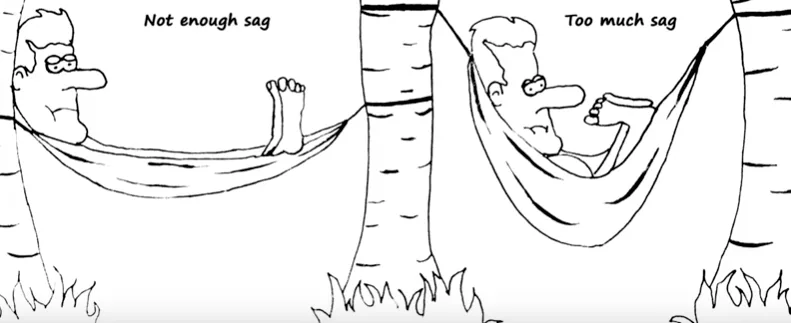
It’s a pretty common misconception that the tighter your hammock is stretched, the flatter and more stable your sleeping space will be. Not true. You want to set your hammock so that the arc of you body sets your feet level with your head, leaving enough slack in your straps to allow your shoulders lots of movement.
3. Lay at an angle
It’s instinct to lie in a hammock in line with the straps or ropes, but unless you have a spreader bar, this is incorrect. By laying slightly diagonal to your line, your body will relieve any pinch points that might be caused by the hammock and give you a much better night’s sleep.
While sleeping on your back is recommended, side sleeping in a hammock can be done but we'd recommend an extra long hammock with a good bit of sag.
Play around with the angles and find what's comfortable for you. It's a good idea to take a nap or two first before a full night to learn how to avoid back pain.
4. Cross your legs
By occasionally crossing one leg over the other, you are ensuring adequate blood circulation, and will keep your spine aligned.
5. Accessorize
A camping pillow under the leg will do wonders for comfort. As will a rain fly, bug net, or quilted camping pad, depending on your needs. All these accessories are lightweight and pack into a very small space.
Benefits of Sleeping In a Hammock Properly
What Are The Benefits of Sleeping in a Hammock?
Do hammocks hurt or help your back?
What Type of Hammock is Best For Sleeping?
Is it bad to sleep in a hammock every night?
With a little experimentation, you too can find your perfect hanging bed.
Hanging between trees since 2013. I test every hammock the same way: is it comfortable, is setup actually simple, and does it respect the trees? Honest field notes, always. Catch the setups and reviews on the YouTube channel.